Vol.24 多重露光的撮影裏話:「Coexistence」
#double exposure #film swap #フィルムカメラ #フィルムスワップ #フィルム写真 #多重露光 #撮影方法
<English follows Japanese >
シリーズ「多重露光的撮影裏話」、今回は僕の代表作の一つ、モノクロ多重露光作品 「Coexistence(共存)」 の舞台裏をご紹介します。撮影の工夫や意外な落とし穴まで、ぜひ最後まで楽しんでください!
コンセプトは「共存」

僕のモノクロ作品の多くは、人工物と自然を重ねることで「共存」をテーマにしています。
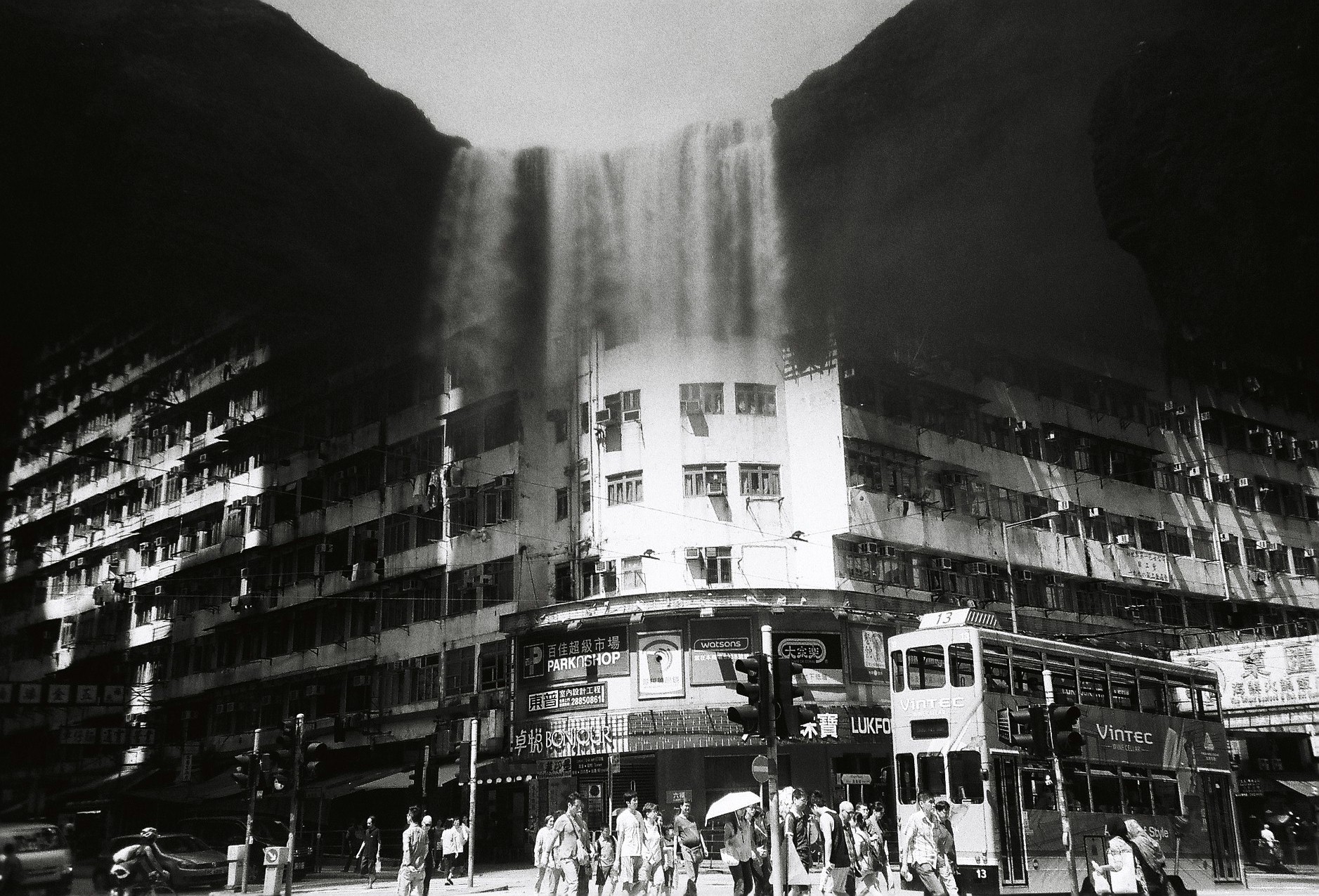
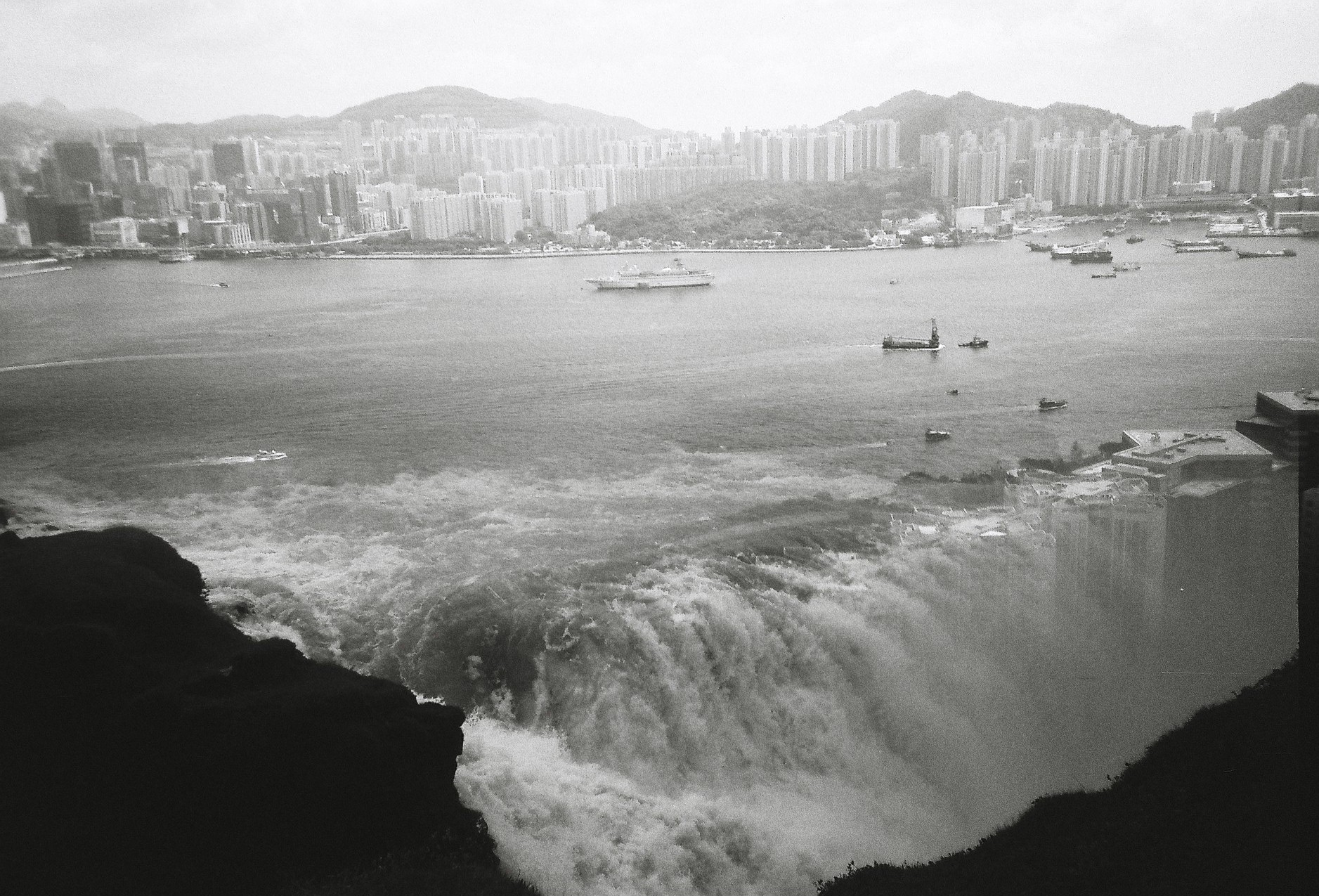
この「Coexistence」(上写真)では、巨大な集合住宅の隣に大瀑布が流れ落ちる構図を選びました。込めた意味は――いかに人類の文明が発展しても、自然には決して抗えない、ということ。
その表現のために、アイスランドの スコゥガフォスの滝 と、香港の「モンスターマンション」と呼ばれる集合住宅を組み合わせ、セルフフィルムスワップによる多重露光で挑みました。
撮影ルートを組む重要性
アイスランドと香港、2か所をまたぐ撮影となるため、最初に重要なのは「撮影ルート作り」。
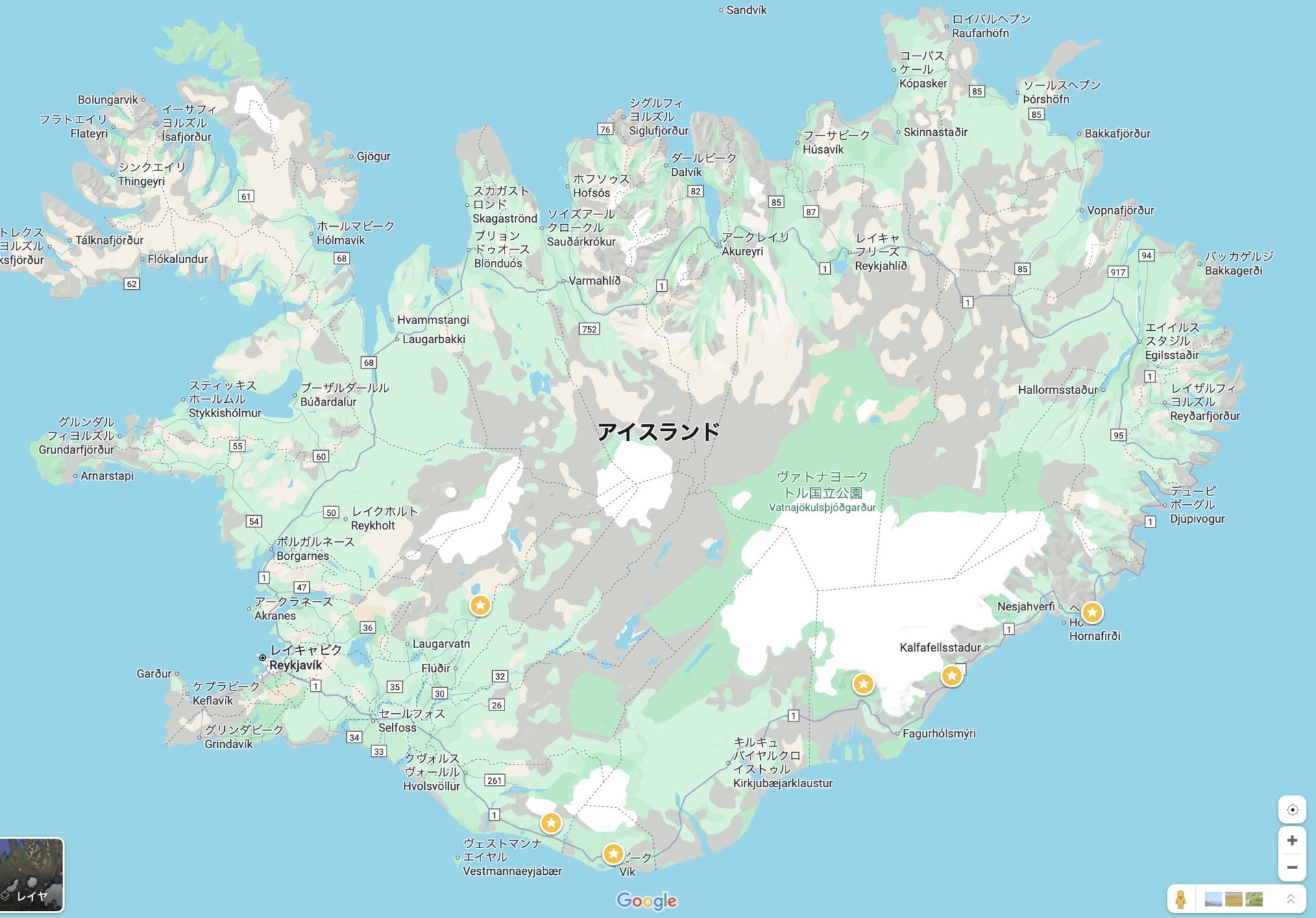
僕の場合は出発前に撮影する多重露光の大まかなイメージを決め、Google Map などを使って被写体や撮影場所を確認します。特に今回は同じフィルムをアイスランドと香港の両方で使用するため、後の撮影をスムーズに進められるよう、1回目のアイスランドでの撮影時から香港でのルートも同時に考えていました。
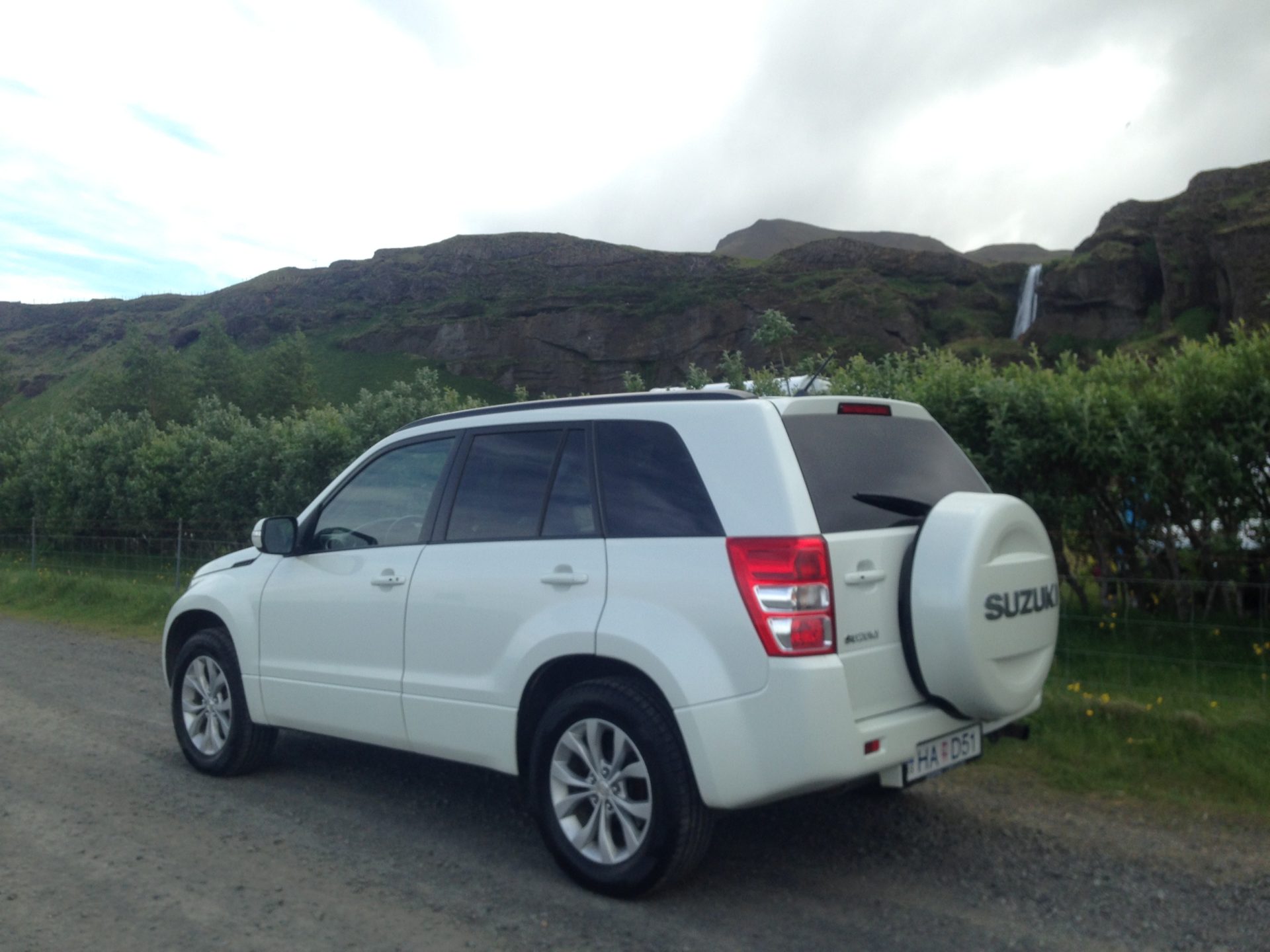
アイスランドでは公共交通がほとんどないためレンタカーを利用。海外での運転は初めてで緊張しましたが、市街地を離れると対向車も少ない道路ばかりで、すぐに慣れることができました。

圧巻のスコゥガフォス
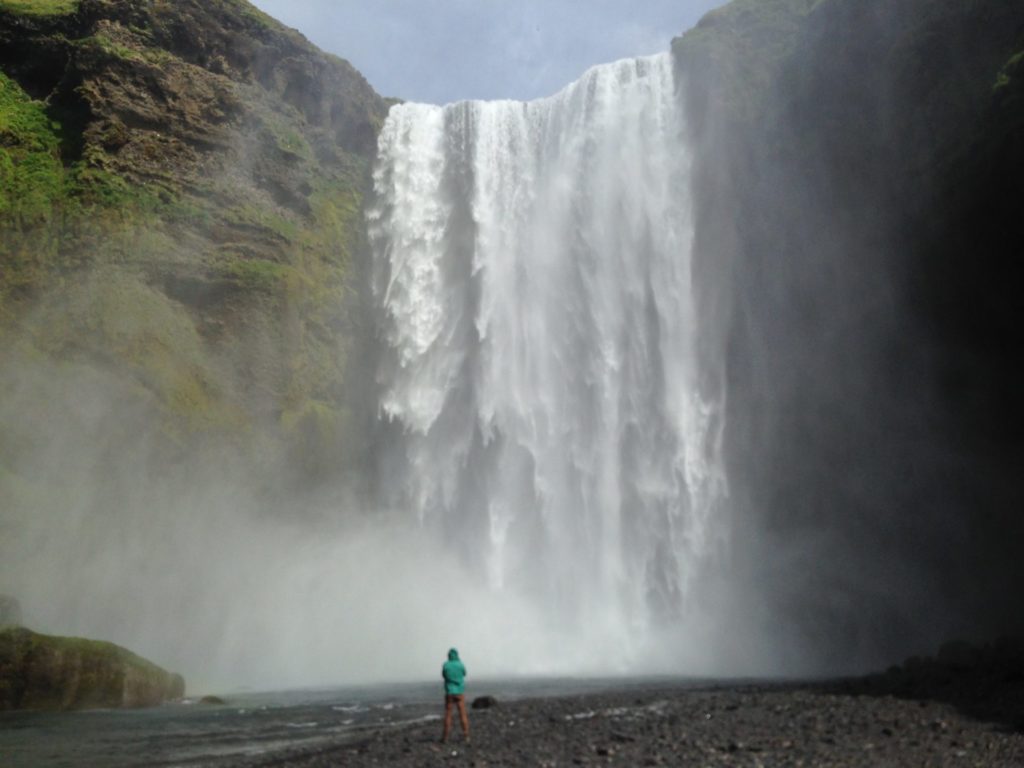
高さ約60メートルのスコゥガフォスは、近づけば大量の水しぶきで全身びしょ濡れになるほど迫力満点。
ここで大事なのは、香港のモンスターマンションとサイズ感や見上げる角度を合わせること。過去に何度もモンスターマンションを撮影してきた経験を活かし、その距離感を思い出しながら滝に迫りました。カメラが濡れないよう注意しつつ、自分はびしょ濡れになりながら何度もシャッターを切ったのです。
香港での2回目の撮影
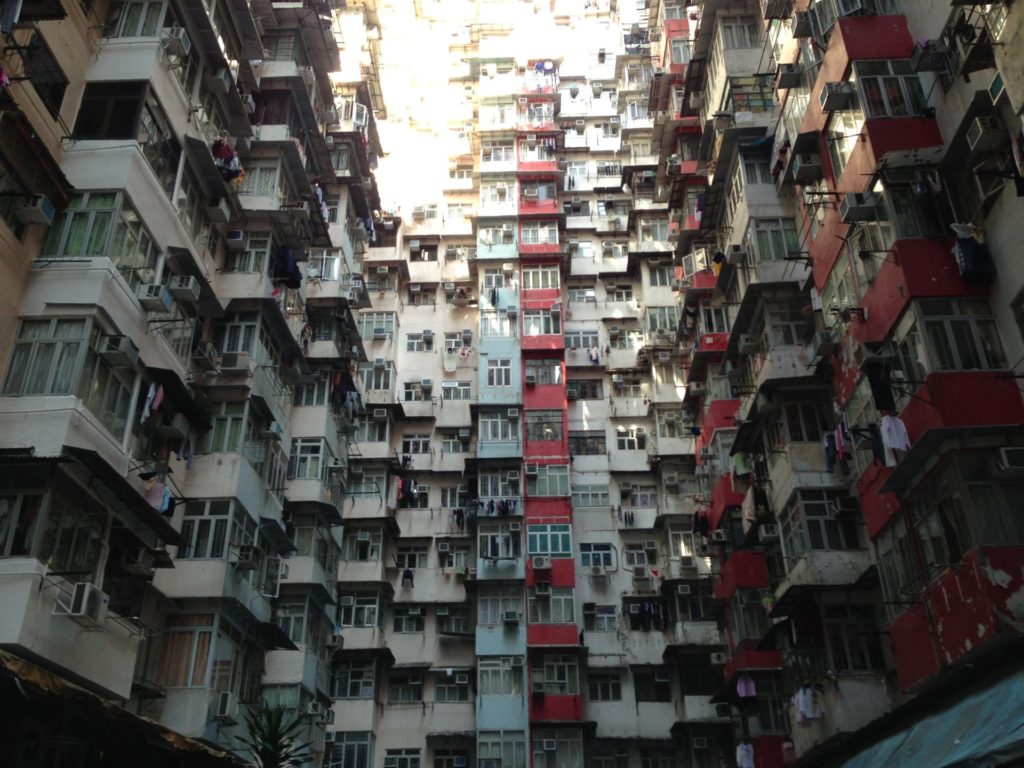
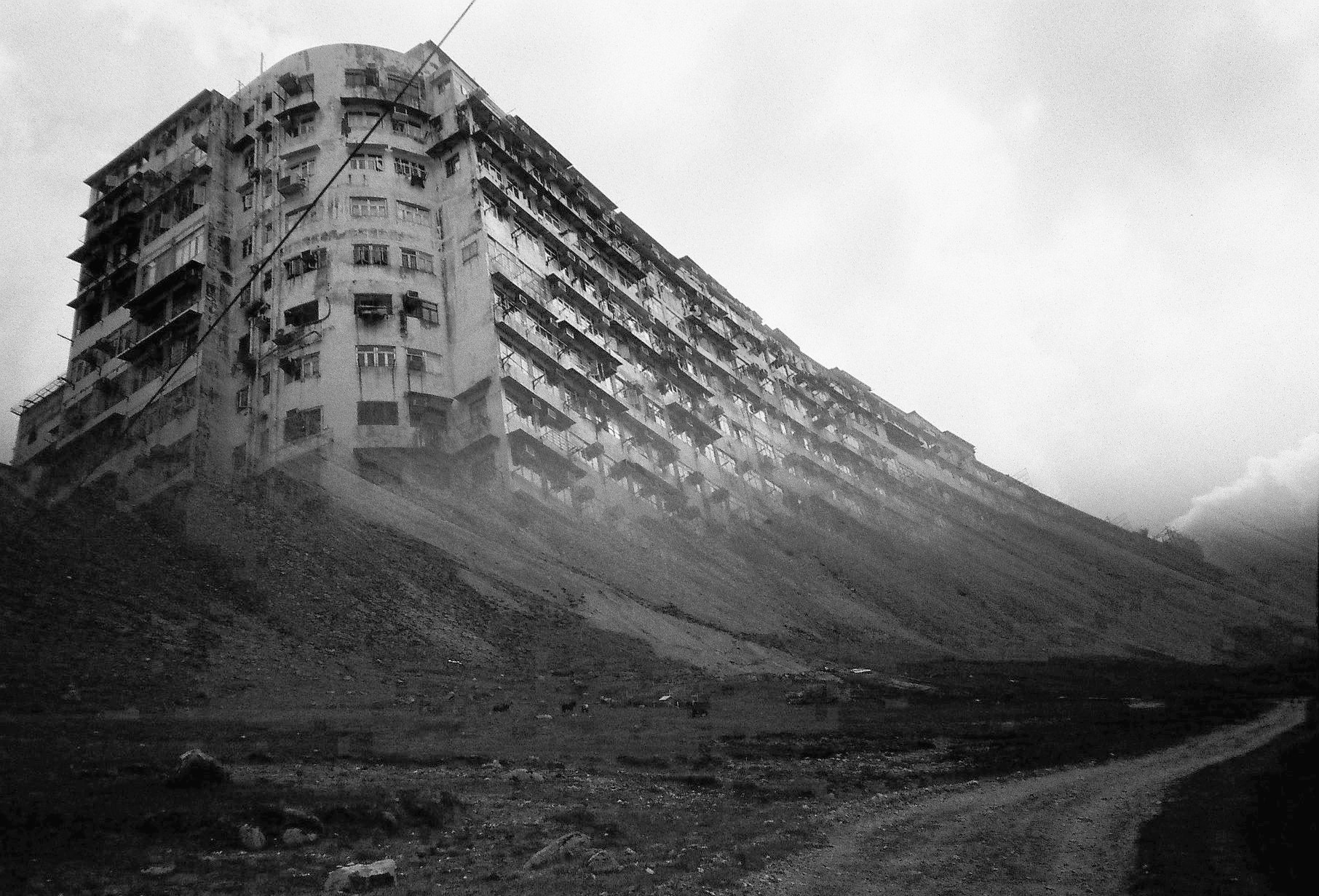
数か月後、香港に渡り再びフィルムをカメラに装填。1回目の撮影時に残したメモを頼りに、モンスターマンションでの撮影を始めました。建物は実際には生活感がありますが、モノクロで写すとまるで廃墟のような迫力に。ここでも滝を思い出しながら、サイズ感や角度を意識して撮影しました。もちろん勘に頼る部分も多いので、結果に固執せず楽しみながらシャッターを切りました。
「Coexistence」誕生
帰国後に現像を終え、完成したのが冒頭で紹介した「Coexistence」です。
数か月に及ぶ準備、そして過去の経験を活かした綿密な計画がこの一枚を生み出しました。多重露光は偶然性を楽しむ表現でもありますが、僕の場合はコンセプトを持ってその世界観に近づけるよう、あえて計画性を重視しています。
このフィルムでは、スコゥガフォスとモンスターマンション以外にも複数の組み合わせを撮影。撮影ルートを事前に組んでおくことで、成功率は格段に上がります。
撮影の裏側とハプニング
そして最後に、ちょっとしたハプニングを。
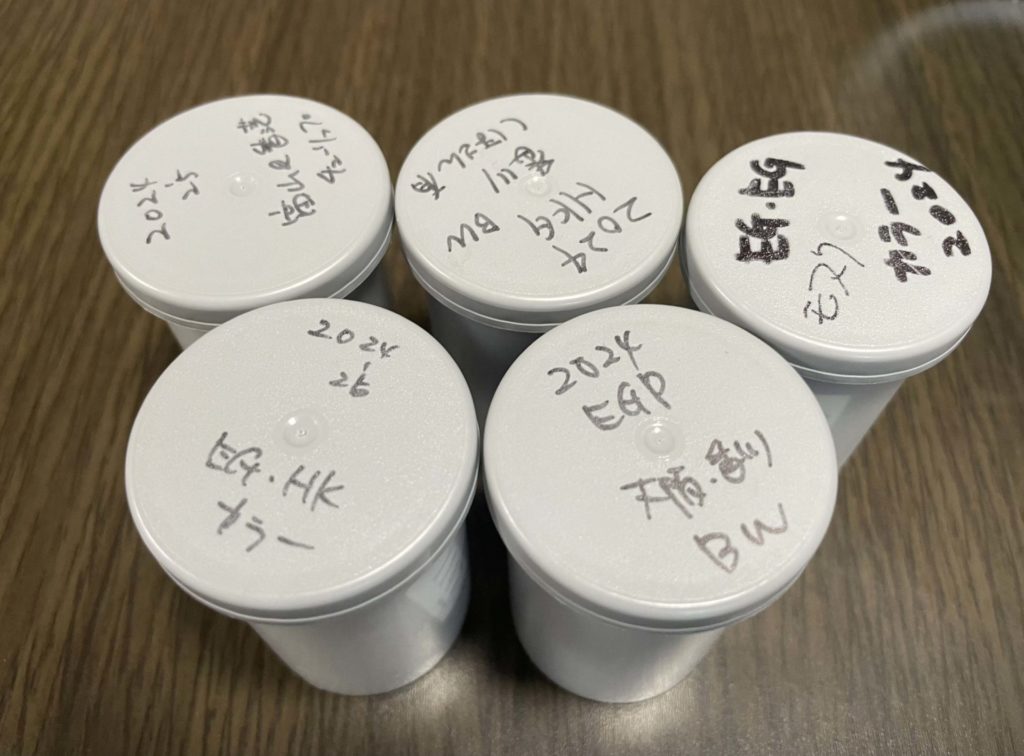
僕はフィルムケースの蓋にメモを書き込んで、どのフィルムがスワップ用か分かるようにしていました。ところが帰国時、空港のセキュリティでそのメモが怪しまれ、「これは何の意味だ?」と厳しく問い詰められてしまったのです。英語で必死に説明しても全く伝わらず、途方に暮れていたところ、隣にいた別の係官が「通してあげなよ」と一言。そのおかげで無事に飛行機に乗ることができました。それ以来、国際線に乗る際にフィルムケースの蓋にメモを書くのはやめたのでした。
「Coexistence」は偶然だけでなく、綿密な計画と準備、そして少しの運が重なって完成した一枚です。一見シンプルに見える多重露光の裏側には、こんなドラマが隠れているのです。この作品を含め、モンスターマンションを特集したZINE 『Coexistence』 を刊行しています。ページをめくる体験とともに多重露光の世界をより深く味わっていただけます。
ZINE『Coexistence』は下記よりご注文頂けます。
- 1,650円 [税込]
「Coexistence」 ― 時空と境界を超えて、共存を見つめるZINE ― 香港で“モンスターマンション”の通称で知られる巨大集合住宅。1960年代に建てられ、現在も2000戸を超える住居がひしめき合いながら人々の暮らしが続く。無機質なコンクリートの塊でありながら、どこか人の息遣いが感じられるこの場所は、時代の記憶をそのまま内包する稀有な建築物です。 本作『Coexistence』では、この象徴的な建築物を主軸に、日本、アイスランド、エジプト、台湾、インドネシア──異なる自然や文化を重ね合わせ、モノクロの…

Behind the Scenes of Double Exposure: Coexistence
This is part of my series, Behind the Scenes of Double Exposure, where I share the stories behind individual works. This time, I’ll be talking about one of my representative black-and-white double exposure pieces, Coexistence. There were some unexpected challenges along the way, so I hope you’ll enjoy reading to the end!
Concept: “Coexistence”
In my black-and-white double exposures, I often combine elements of nature with man-made structures under the concept of “coexistence.” Coexistence is a quintessential example: a massive housing complex stands beside a roaring waterfall.
The meaning behind this concept is simple: no matter how advanced human civilization becomes, it can never overcome nature. To express this, I chose two iconic subjects—the Skógafoss waterfall in Iceland and Hong Kong’s so-called “Monster Mansion”—and photographed them through a self-film-swap double exposure.
Planning the Route
Once I decided on Iceland and Hong Kong as my two locations, the process began with planning the shooting routes. This is a crucial step.
Before setting out, I always create a rough idea of how I want my compositions to look. Using tools like Google Maps, I scout out locations and plan routes. Since the same roll of film would be exposed once in Iceland and again in Hong Kong, I had to carefully coordinate both routes in advance. This ensured efficiency during the second round of shooting.
On the map below, you can see the points in Iceland where I shot during the first round (Skógafoss and other locations). At each spot, I was already imagining how the second exposures in Hong Kong would align.
Transportation in Iceland is another challenge, as there are virtually no public options—so I rented a car. It was my first time driving abroad, and I was nervous. But outside Reykjavík, most of the roads were quiet and easy, with almost no oncoming traffic, so I quickly became comfortable, even with left-hand driving.
Skógafoss: Shooting the First Exposure
The photo below shows Skógafoss itself—a breathtaking 60-meter waterfall. There are no fences, so you can approach as close as you dare, but the closer you get, the more you are drenched in mist.
For this project, it was essential to align the scale and upward angle of the waterfall with the Monster Mansion in Hong Kong. Having photographed the Monster Mansion many times before, I knew what kind of perspective I’d need. That meant shooting Skógafoss from quite close, getting myself soaked while carefully protecting the camera, and pressing the shutter again and again.
The Monster Mansion: Second Exposure
A few months after returning from Iceland, I traveled to Hong Kong for the second half of the shoot. I reloaded the same film into my camera, along with the notes I had made of what frame contained which subject in Iceland.
The Monster Mansion, shown below, might appear like a ruin in black-and-white photography, but in reality, it doesn’t feel abandoned—it’s simply overwhelming in scale. Here, I recalled the perspective and angle I had used at Skógafoss, doing my best to align the two exposures.
Much of this process relies on intuition. Instead of obsessing over perfection, I focused on enjoying the act of shooting itself.
The Final Result
Back home, I developed the film. The result was Coexistence, the double exposure you saw at the top of this post.
In reality, this single image represents months of preparation and the accumulation of past experiences. While double exposure often involves embracing chance, I always carry a concept and plan meticulously to bring the image as close as possible to what I envisioned.
On the same roll of film, I also created other pairings of Iceland and Hong Kong subjects—these were planned in advance during the route-making stage. Once you become familiar with this process, detailed planning significantly increases your success rate with double exposures.
An Unexpected Airport Incident
Finally, let me share a small mishap that occurred at the airport on my way back.
To keep track of my rolls for film swaps, I usually write notes on the lids of film cases. At airport security, one of these labeled lids caught the staff’s attention. The film itself wasn’t suspicious, but the handwritten note was questioned: “Why is this written here?”
I tried explaining in English: “I’m shooting multiple exposures on film, using a film swap technique…” But the officer just looked at me like, “What are you talking about?” I was at a loss, unsure how to make it clear to someone with no photography background.
Thankfully, another officer nearby stepped in with a simple “Just let him through.” Thanks to that one merciful comment, I was able to board my flight. Since then, I’ve stopped writing notes directly on film case lids whenever I travel internationally.
Coexistence is not just the product of chance, but of detailed planning, preparation, and a bit of luck. Behind every double exposure lies a story like this.
This piece became central to my work, and I’m excited to share that I’ve published a dedicated photo book, “Coexistence”, featuring the Monster Mansion series.
Discover more in my photo book Coexistence here