Vol.23 多重露光撮影裏話シリーズ始めました!
#double exposure #film swap #multiple exposure #フィルムカメラ #フィルムスワップ #フィルム写真 #多重露光 #撮影方法
<English follows Japanese>
多重露光作品の裏側を紹介する新シリーズ「多重露光的撮影裏話」をスタートします!
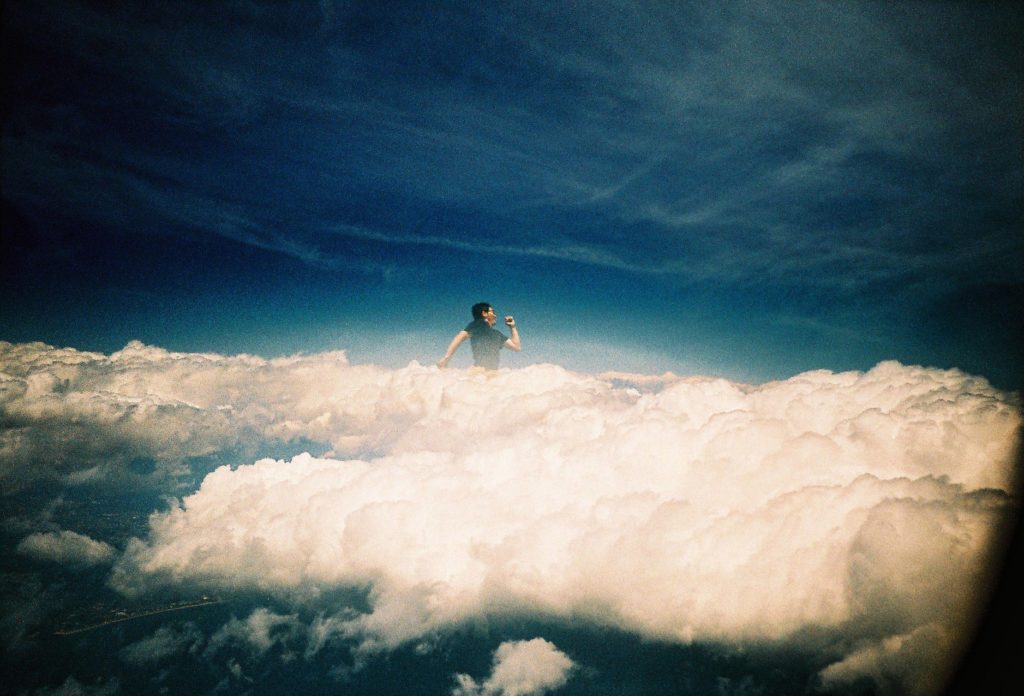
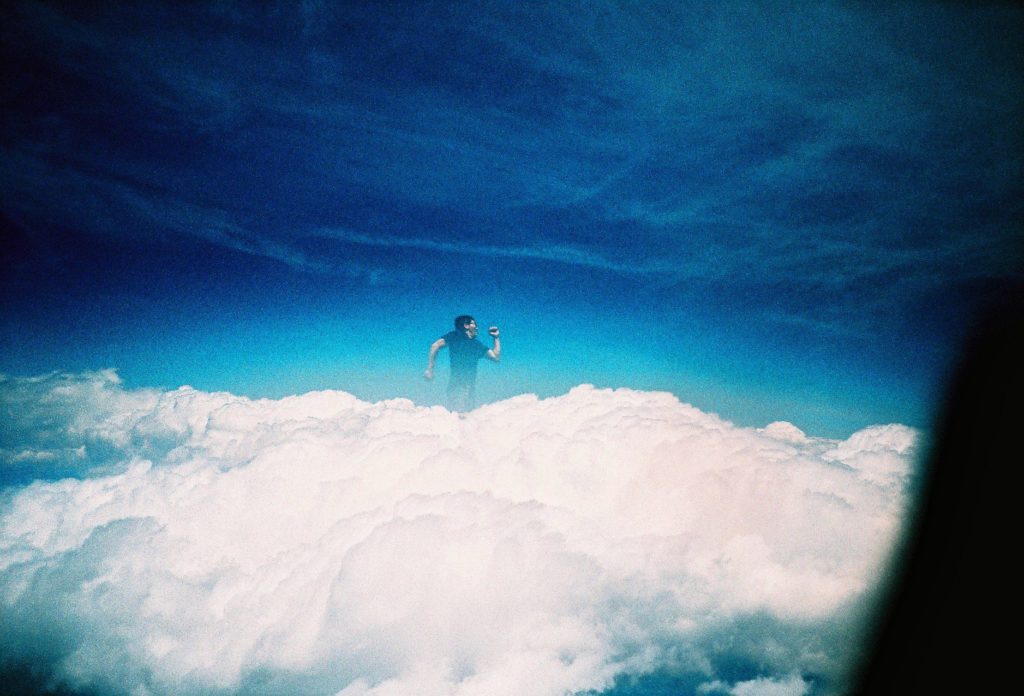
実際の一枚を題材に、撮影方法や現場のエピソードを交えながら、多重露光の面白さをお伝えしていきます。その第1回は、僕の代表作のひとつでもある「Catch me if you can」。

アイデアの源はマグリット
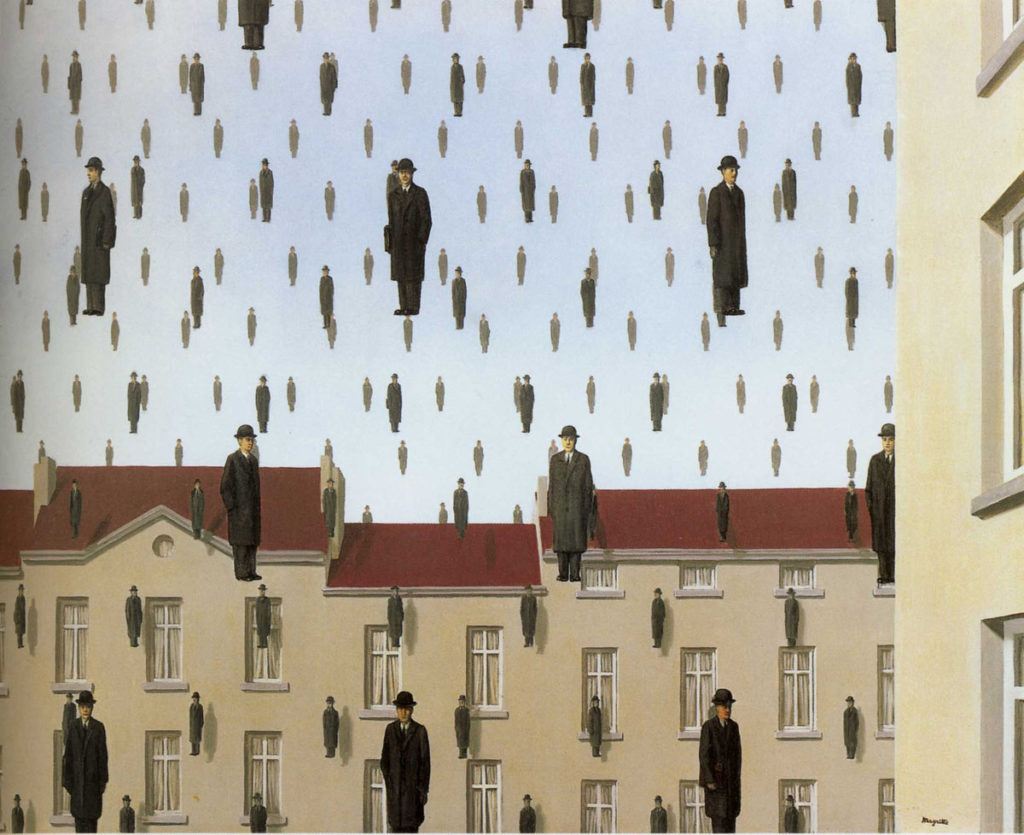
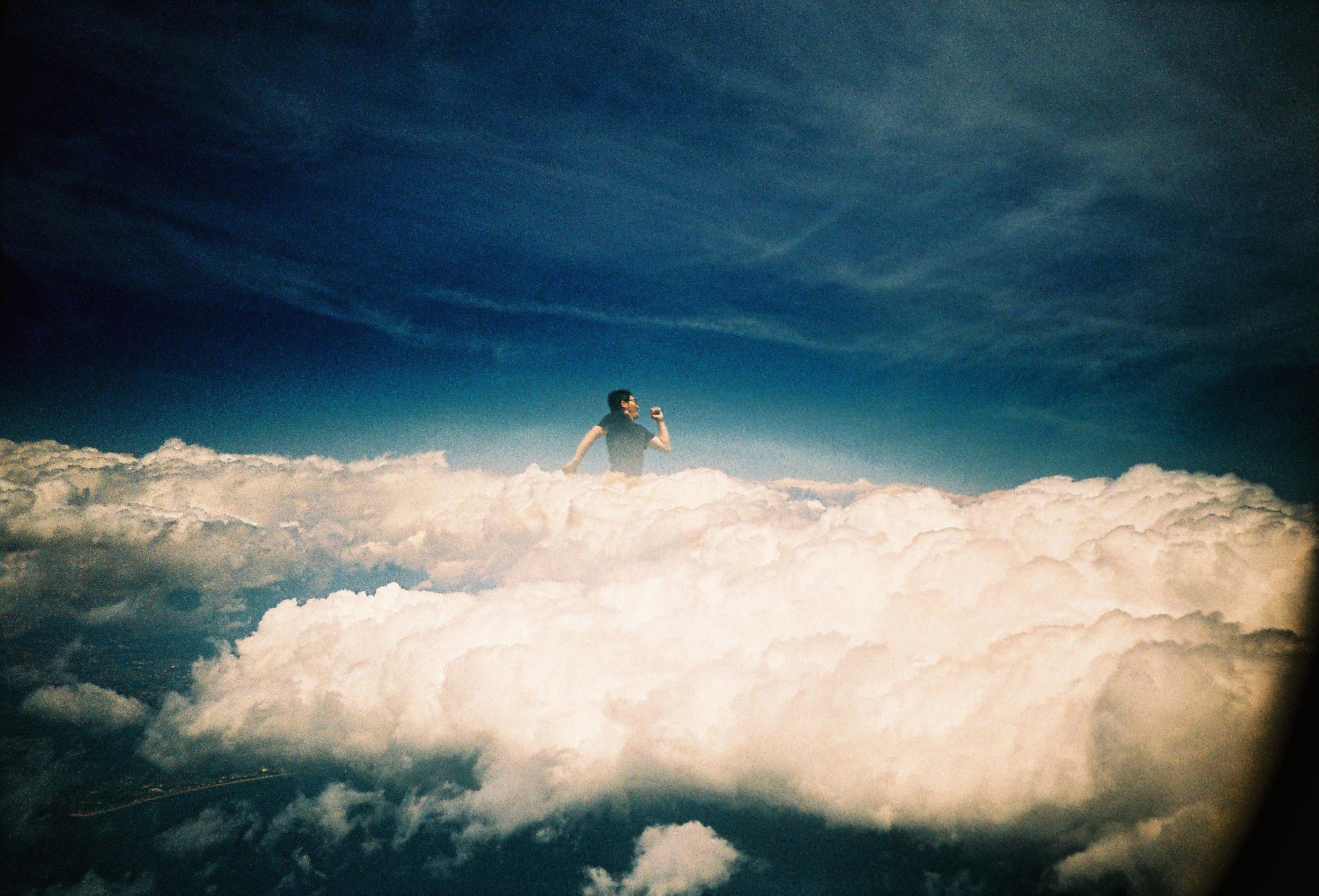
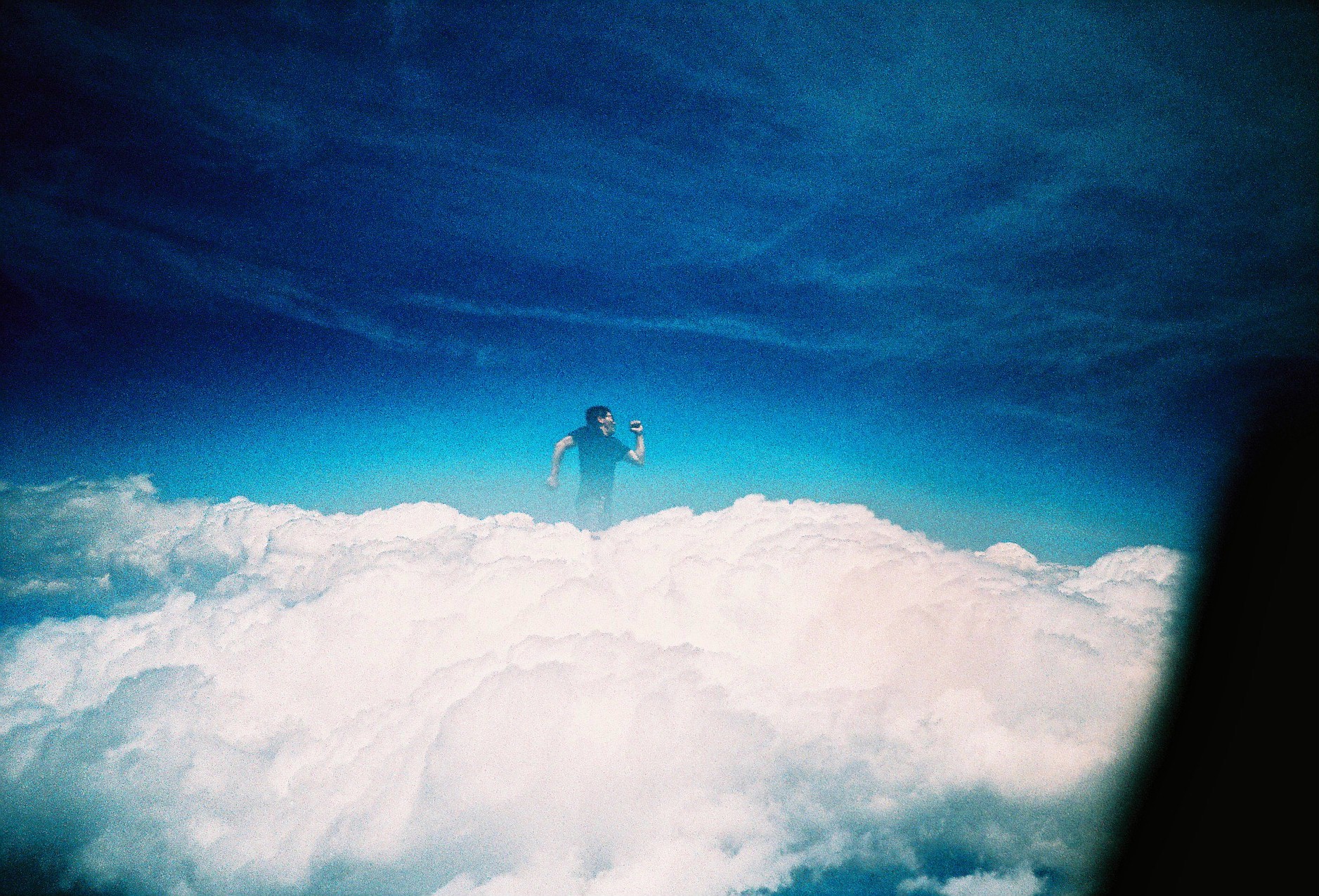
この作品は「雲の上をジャンプする人」をイメージして撮影しました。実はアイデアのきっかけは、画家ルネ・マグリットの「ゴルゴンダ」という作品です(参考資料参照)。マグリットからは多重露光の発想を得ることが多く、この作品もいつか自分なりに表現したいと考えていました。ただ、彼の絵のように複数人を浮かせるのは難しい。そこで「ひとりだけを宙に浮かせよう」と決め、さらに「せっかくなら雲の上に立たせたら超現実的で面白い」とひらめきました。
撮影方法は、レンズを上下にマスキングして行うセルフフィルムスワップ。上半分でジャンプする人を、下半分で雲(実際は他の景色も含む)を撮影する、という方法です。セルフフィルムスワップの詳細はこちらのブログをご覧ください。
フライトの座席選びも成功の鍵
フィルムスワップは簡単に説明すると「撮影済みの未現像フィルムを、再びカメラに装填して二度撮影する」という技法です。
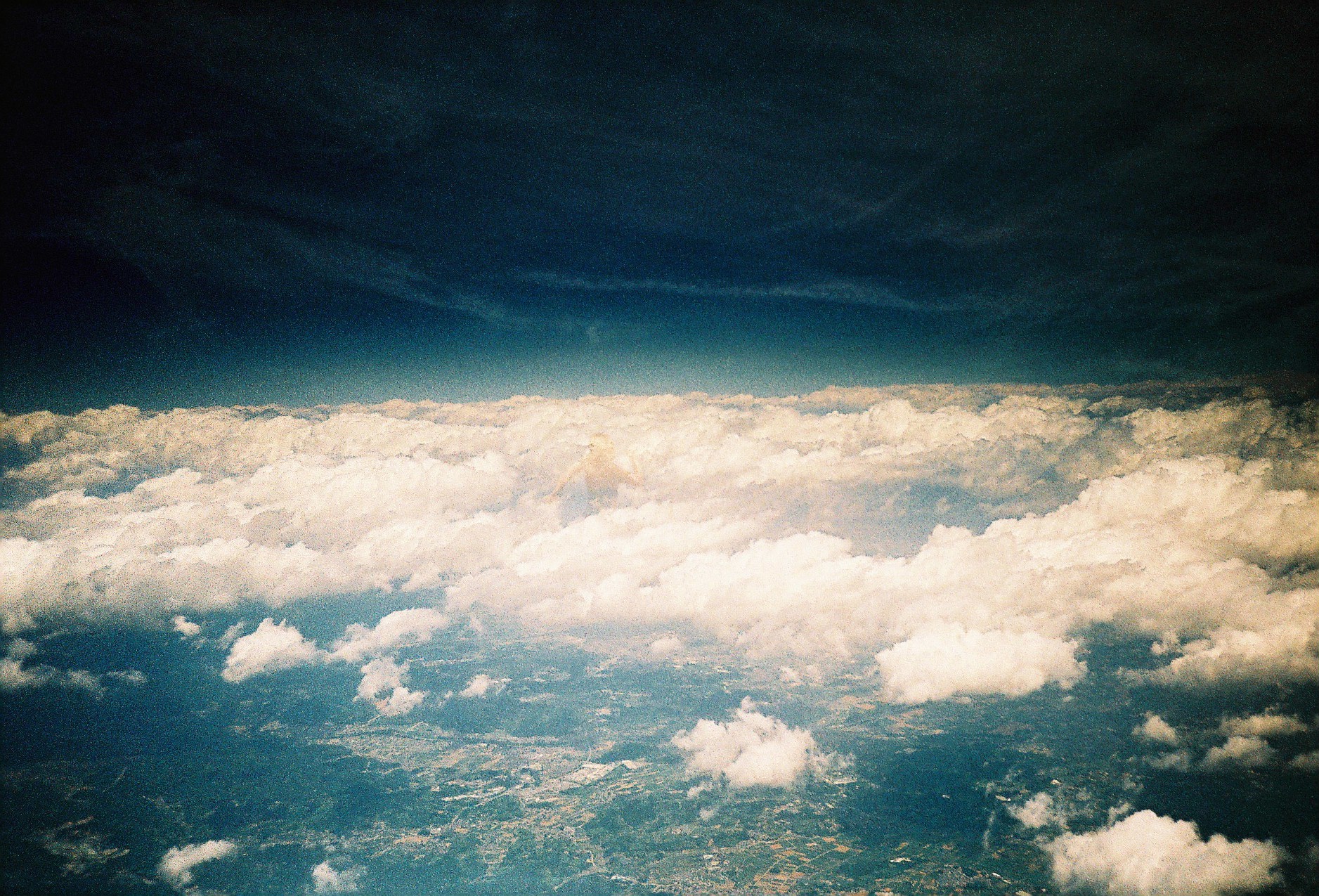
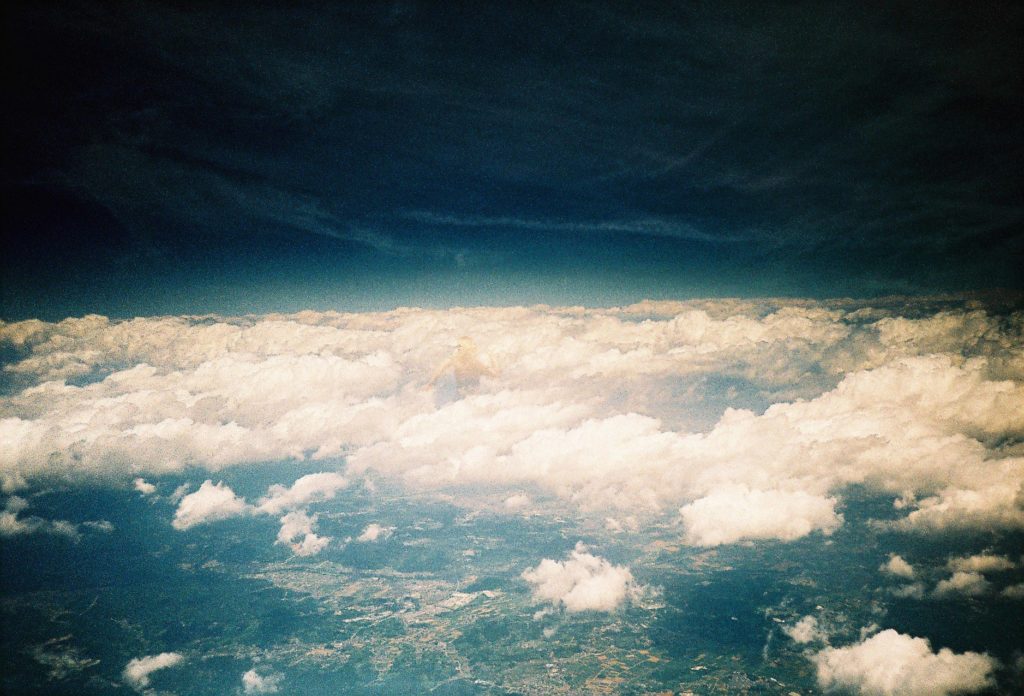
と言うことでまず1回目の撮影は飛行機の機内から。レンズの上半分を隠し、下半分だけで雲を撮影しました。ただし理想的な雲を撮るには座席指定も重要。
- 絶対に窓側の席
- 翼が写り込まない位置
- 順光で撮れる座席
これらを満たす必要があります。僕が選んだのは、中部空港発・香港行きの午前便。飛行方向が南西のため、右側の窓際なら順光で雲を狙えます。さらに後方の座席を指定し、翼の写り込みも回避。実はこの時点から撮影計画は始まっていたのです。
静まり返る機内で
フライト当日。大事なのは天候と雲の出方。こればかりは運次第ですが、幸運なことに理想的な雲が登場!早速シャッターを切ります。「カシャ、ジリジリジリ、カシャ、ジリジリジリ…」と繰り返し響くのはシャッターと巻き上げレバーの音。LOMO LC-A+の操作音がエンジン音に負けないほど機内に響き渡ります。変わらない空ばかり撮り続ける僕に、周囲からの視線を感じつつも撮影を続けました。
こうしてフィルム下半分の撮影を終え、巻き戻して2回目の撮影へ。
真夏のジャンプ
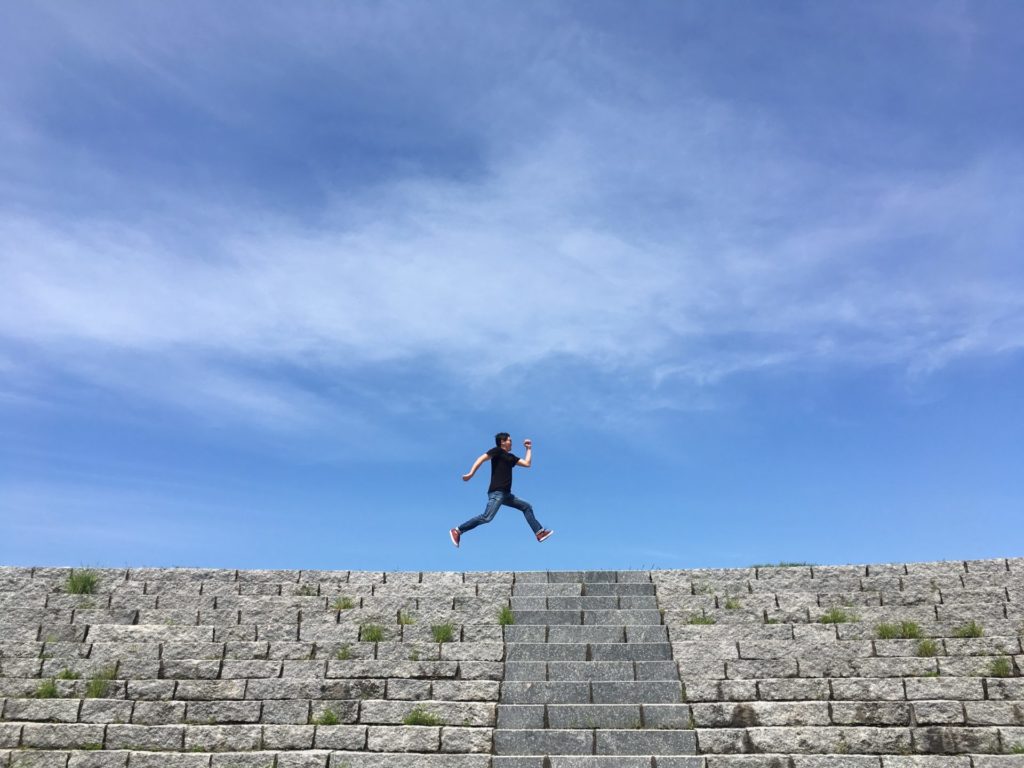
次の舞台は滋賀県・琵琶湖湖岸にある公園。
この場所を選んだ理由は、背景に建物や電柱がなく、モデルとの間に高低差があり、安全にジャンプできるから。そして人も少ない穴場だったからです。
当日は友人にモデルをお願いし、真夏の炎天下でひたすらジャンプ! その数なんと50回ほど。
汗だくになりながらも協力してくれたおかげで「Catch me if you can」は完成しました。
難易度200%の挑戦
この作品は勘に頼る部分が大きい撮影でした。
1回目に撮影した雲の上に、自然にジャンプしているように重ねなければならないからです。カメラの角度やシャッターのタイミングが少しでもズレると、人物が雲の中に沈んでしまいます。
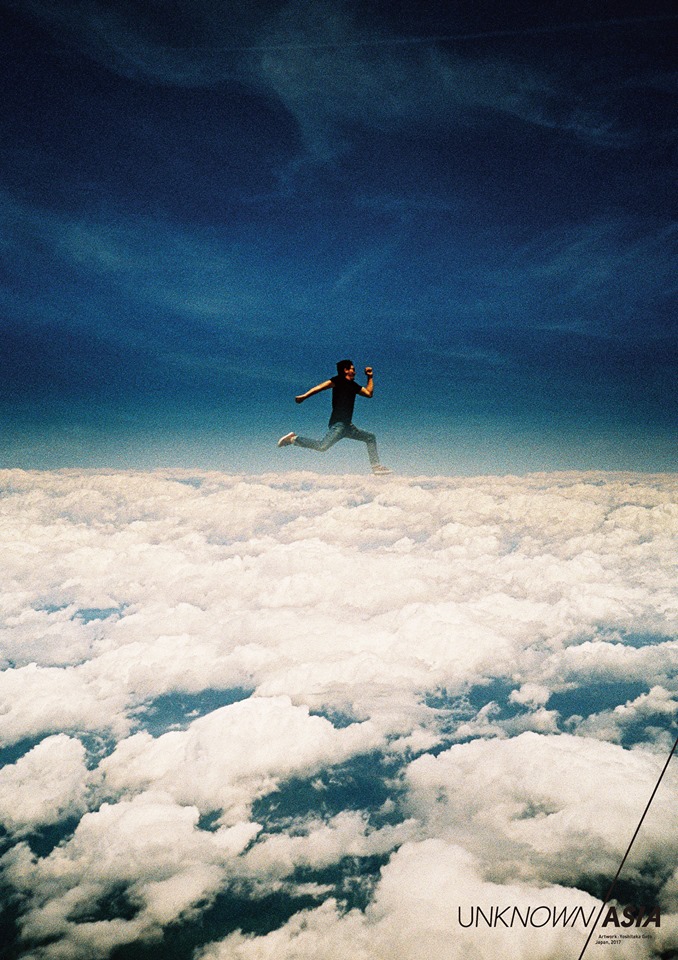
実際、2本のフィルムで成功したのはわずか2枚だけ。それでもこの難易度を考えれば、大きな成果だったと思います。
努力が報われた瞬間
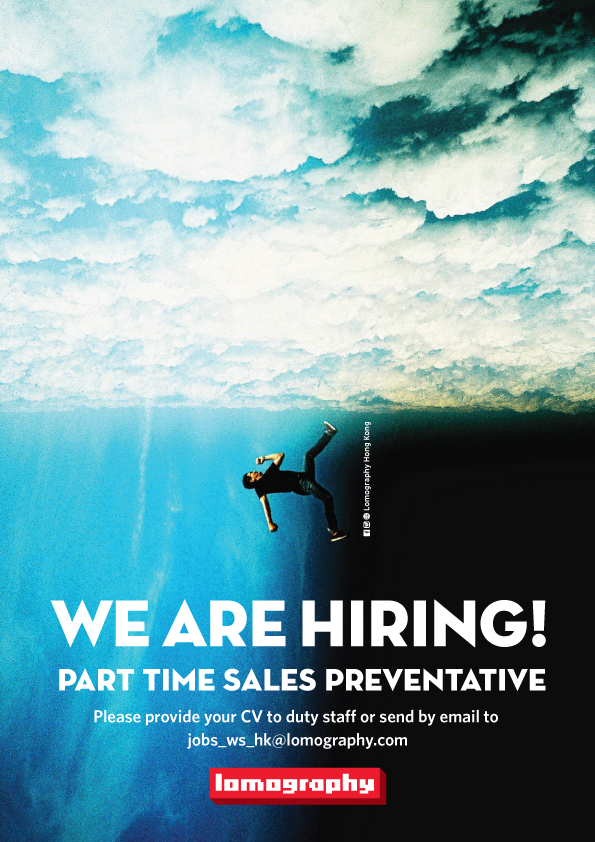
こうして奇跡的に成功した「Catch me if you can」は、他の作品とともに各種アートワークに採用されました。努力の結晶が世に出た瞬間は、何よりも嬉しい経験でした。
まとめ
1枚の多重露光には、これだけのストーリーが詰まっています。
「Catch me if you can」が写真集『X-ing』の表紙を飾ったのも納得いただけるのではないでしょうか。写真集『X-ing』は下記よりご注文いただけます。次回の「多重露光的撮影裏話」もお楽しみに!
- 2,500円 [税込]
この写真集は、ロモグラフィーの象徴的なカメラであるLOMO LC-Aシリーズで撮影された、多重露光とクロスプロセス技法を駆使した43点の作品を収録しています。 私の代表的なスタイルであるこれらの作品は、まるで映画のワンシーンを切り取ったかのような豊かなストーリー性を持ち、音楽が流れてくるかのようなリズム感が特徴です。レコードジャケットサイズのデザインを採用することで、その魅力を最大限に引き立てています。 この写真集は、作品だけでなく装丁にもこだわり、かつてないインパクトを放つ一冊に…

Behind the Scenes of Multiple Exposure Photography – New Series!
I’m starting a new blog series: “Behind the Scenes of Multiple Exposure Photography”.
In each post, I’ll take one of my works and share how it was created—the shooting method, the location, and the little stories behind the images.
For the very first episode, I’ll be talking about one of my masterpieces: “Catch me if you can.”
Inspiration from Magritte
This photograph depicts a person jumping above the clouds.
The original inspiration came from René Magritte’s famous painting Golconda (see reference below).
I often get ideas for multiple exposures from Magritte’s surreal works. For this one, I thought: What if I could adapt “Golconda” into my own photography?
Of course, floating many figures in mid-air like Magritte painted wasn’t possible. So I decided to focus on a single figure—and then I realized it would be even more surreal if that person was floating above the clouds.
The method I chose was self film swap multiple exposure with partial masking of the lens:
- The top half of the frame for the jumping person.
- The bottom half for the clouds (and other scenery).
Even Seat Selection Matters
Self film swap is a technique where you reload an already-exposed but undeveloped roll of film into the camera and shoot it again, effectively double-exposing the same roll.
For the first round of shooting, I needed to capture the clouds from an airplane.
By masking the top half of the lens, I photographed only the bottom half of the frame.
But to shoot the “right” clouds, seat selection was critical:
- Window seat only.
- A position where the airplane wing wouldn’t appear.
- A seat with front light rather than backlight (to avoid washed-out skies and harsh shadows on the clouds).
The perfect choice was a morning flight from Chubu Airport to Hong Kong.
The route heads southwest, so the right-hand side of the plane offered ideal front lighting. I reserved a rear seat to avoid the wing—though ideally, I would have liked the front, but those were business class!
In other words, the preparation for this photograph began at the very moment I booked the flight.
Silence in the Cabin
On the day of the flight, the key factors were weather and cloud formation.
These were beyond my control—only luck could decide. Fortunately, luck was on my side: shortly after takeoff, beautiful clouds appeared.
I immediately raised my camera:
Click… whirr… click… whirr… click… whirr…
The shutter and film advance lever of my LOMO LC-A+ echoed loudly in the otherwise quiet cabin, almost competing with the engine noise.
I could feel the curious stares of nearby passengers as I kept photographing the nearly unchanged view of the sky. But I pressed on until I finished the lower half of the roll. Then, I rewound the film and prepared for the second exposure.
Jumps in the Summer Heat
The second location was along the shore of Lake Biwa in Ōtsu City.
I chose this spot because:
- There were no distracting backgrounds (buildings, power lines, or mountains).
- There was a natural slope, giving me a safe angle and height difference.
- Few people gathered there, making it perfect for shooting.
On that day, a friend modeled for me and jumped around 50 times!
It was the peak of summer in August, and despite the blazing heat, my friend cooperated with a smile (or maybe I just didn’t notice the complaints). Thanks to their effort, we completed Catch me if you can.
A 200% Difficulty Challenge
This photograph required a lot of intuition and timing.
To make the jump look natural above the clouds, I had to align the second exposure perfectly with the first.
The angle of the camera and the exact moment to press the shutter were crucial. Most attempts failed—the model’s body often ended up “sinking” into the clouds.
Out of two full rolls, only two frames turned out successfully.
And yet, considering the difficulty, even those two frames felt like a small miracle.
Effort That Finally Paid Off
That miraculous success, along with other works from the same roll, was later used as artworks.
At that moment, all the effort and planning felt completely worthwhile.
Conclusion
Behind a single multiple exposure, there lies an entire story of planning, luck, and persistence.
I hope this gives you a deeper appreciation for why Catch me if you can was chosen as the cover of my photobook “X-ing.”
You can purchase “X-ing” here:
Stay tuned for the next episode of Behind the Scenes of Multiple Exposure Photography!